


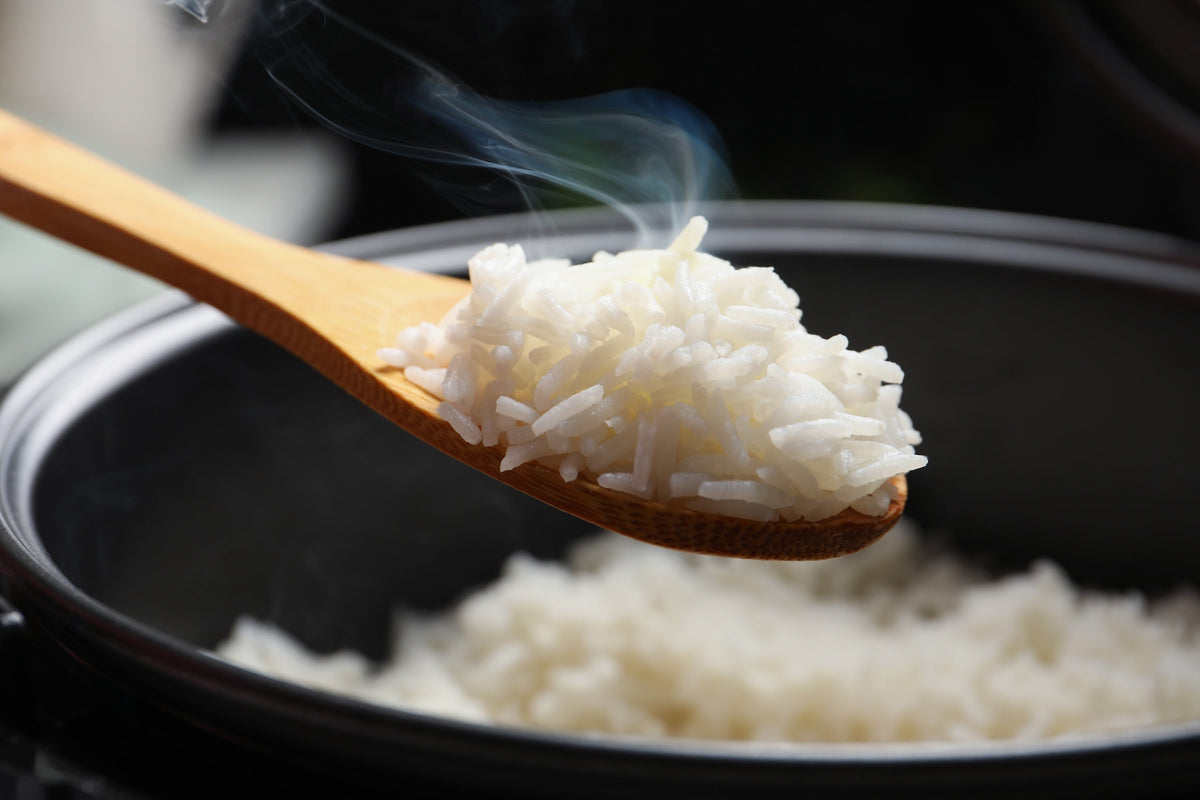
Sometimes rice comes out fluffy and loose, other times it's a sticky lump or turns out hard. Usually the appliance isn't the culprit. The blame lies with the wrong water ratio and a few habits you take care of before you even press start. What are the ratios for the different types of rice, and how should you handle each one so it comes out right every time? Let's finally clear this up.
Why rice doesn't come out the same every time
The mistake tends to happen in the same place. Either there's too much water and the rice turns to mush, or the rinsing step gets skipped and the grains stick together. And sometimes you just lift the lid too soon. The rice cooker does a good part of the work for you, but it can't take over the ratio and the prep. The good news is that once you get the hang of it, it comes naturally.
The water-to-rice ratio to start from
There's no universal ratio, however often the manuals promise one. White rice wants roughly one and a half parts water to one part rice. Brown rice needs considerably more, and more time. Sushi rice, on the other hand, wants a little less so the grains stay firm.
Treat the numbers below as a tested starting point, not exact science. The specific rice, the hardness of your water and your own taste will shift them a little, and that's normal. After the first batch you'll note whether to add or take away a spoonful of water next time, and you've got your ratio.

Type by type: how much water and which programme
Long-grain white (jasmine and basmati). The most common choice and the least work. Start from 1 part rice to 1.5 parts water and use the Rice programme. Basmati appreciates a ten-minute soak before cooking and slightly less water, which keeps the grains long and separate. Jasmine can take a touch more water if you prefer it softer. Rinse before cooking until the water runs almost clear.
Brown and whole-grain. The tougher category. The bran holds on longer, so it needs more water and more time. Count on roughly 1 part rice to 2 to 2.5 parts water and the Grain Rice programme. If you soak it overnight, or at least for an hour, it cooks more evenly and doesn't stay hard in the middle. Patience pays off here. Brown rice can't be rushed.
Short-grain and sushi rice. Short, stickier grains for sushi, onigiri or rice bowls. You want them firm and cohesive, not overcooked, so go lighter on the water, around 1 part rice to 1.2 parts water, with the Sticky Rice programme. Rinsing matters here, as it strips the excess surface starch. After cooking, let it rest under the lid and only then work with it. True Thai glutinous rice is traditionally soaked and steamed, which is a different discipline.
Claypot. Claypot Rice isn't a type of rice, it's a style. The programme mimics cooking in a clay pot and lets a thin crisped layer form at the bottom, which is the part a lot of people love most about this classic. It works well when you want rice with meat, vegetables or an egg as a single dish. Keep the ratio similar to white rice, around 1 : 1.5, and use the Claypot Rice programme.
And one exception. Risotto rice is made completely differently. You want the starch to come out into the sauce, and you add the liquid gradually. It doesn't belong on a standard rice cooker programme, and here it will let you down. Take that as a pointer to what to avoid.
The habits that matter more than the rice cooker
Three things that make the biggest difference, and that most people skip.
Rinse. With white rice and sushi rice you're washing the surface starch off, the starch that would otherwise glue the grains together. Rinse under running water until it runs clear. The exception is risotto, where you actually want the starch.
Let the rice rest. After cooking, leave it covered for another five to ten minutes. The steam evens out, the bottom finishes cooking and the rice firms up. The Keep Warm function looks after this time for you.
Fluff, don't stir. At the end, lift the rice gently with a fork or spatula to aerate it. Stirring crushes it and releases starch, and you end up with porridge. A small thing, and the difference is huge.

Where the rice cooker saves you the guesswork
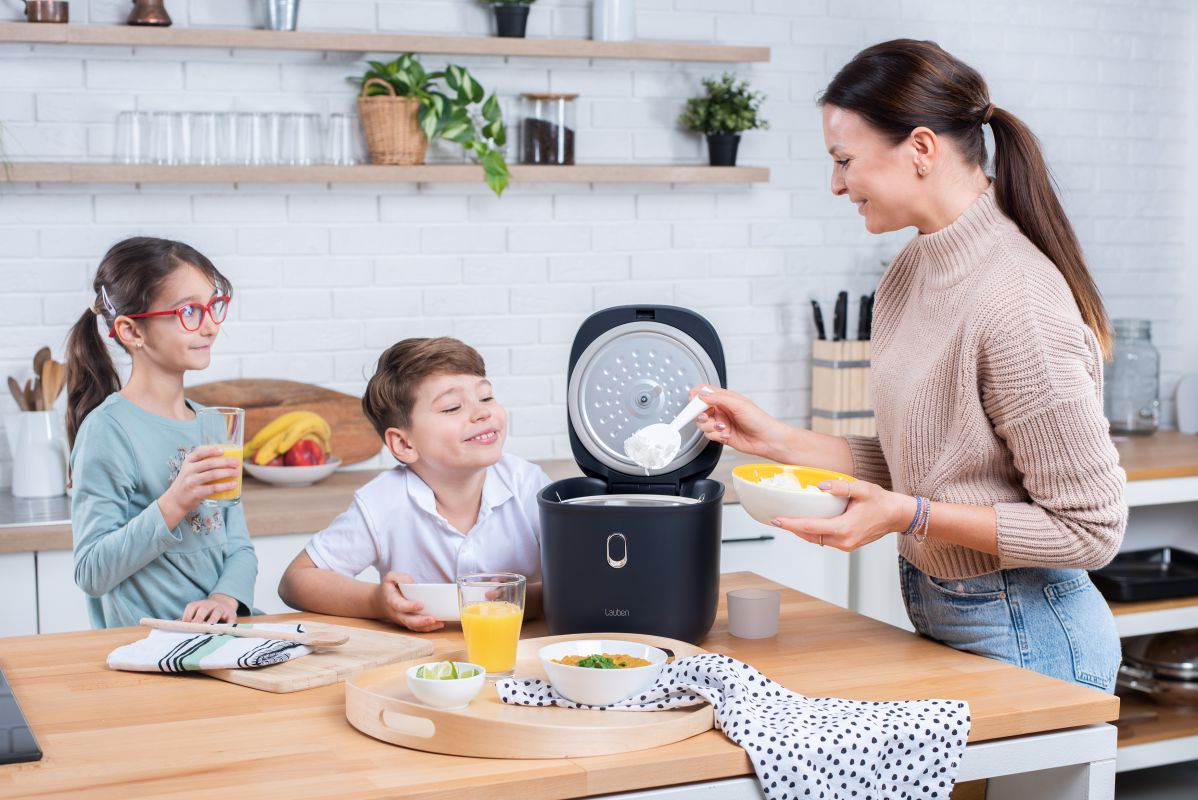
Most mistakes come from guessing. How much water, how long, when to switch off. A rice cooker takes that off your plate. The included measuring cup keeps the ratio, the programmes watch the time and temperature for you, and Keep Warm holds the rice hot until you sit down to eat. With the Lauben Glass Rice Cooker 1600AT/WT you also get a glass inner pot, so you can see the cooking without lifting the lid. Glass doesn't take on odours either, so no flavour lingers in the pot from one strong meal to the next.

FAQ
What's the water-to-rice ratio in a rice cooker?
For white rice, start from 1 part rice to 1.5 parts water. Brown rice wants more, around 1 : 2 to 2.5, and sushi rice less, around 1 : 1.2. Take it as a starting point and fine-tune it to your rice and taste.
Do I have to rinse rice before cooking?
Yes, always do it with white rice and sushi rice. You're washing off the surface starch that would make the grains stick. The only one you don't rinse is risotto rice, where you want the starch.
Why does my rice turn to mush?
Most often it's too much water or stirring after cooking. Next time, try taking out a spoonful or two of water and only fluff the rice gently with a fork at the end rather than stirring it.
Can you cook brown rice in a rice cooker too?
Yes, just count on a longer time and more water. Use the Grain Rice programme, a ratio of around 1 : 2 to 2.5, and ideally soak the rice beforehand so it doesn't stay hard.
How long does cooking rice take?
White rice is usually done in about half an hour, brown rice needs considerably longer. The programme keeps track of the exact time, so you don't have to stand over the stove or measure anything.
Before you press start
Rice isn't rocket science, it just helps to know two things. How much water each type wants, and what to do before and after cooking. Treat the ratios above as a starting point. After a few batches you'll have your own, and your rice will start coming out the same every time. And the rice cooker? It's there to look after the rest.