
Kontaktný gril patrí medzi tie spotrebiče, pri ktorých sa človek čuduje, prečo si ho nekúpil skôr. Grilovať môžete, kedykoľvek sa vám zachce – žiadne čakanie na pekné počasie, žiadne uhlie, žiadny dym. Stačí vám elektrická zásuvka a už o pár minút si vychutnáte grilované kuracie prsia, lososa alebo halloumi so zlatistou kôrkou. Pochúťka.
Vybrať si ten správny kontaktný gril však vôbec nie je jednoduché. Rozdiely medzi jednotlivými modelmivo výkone, grilovacej ploche aj funkciách sú obrovské. Náš sprievodca vám pomôže vybrať správne.
Čo je kontaktný gril
a ako funguje?
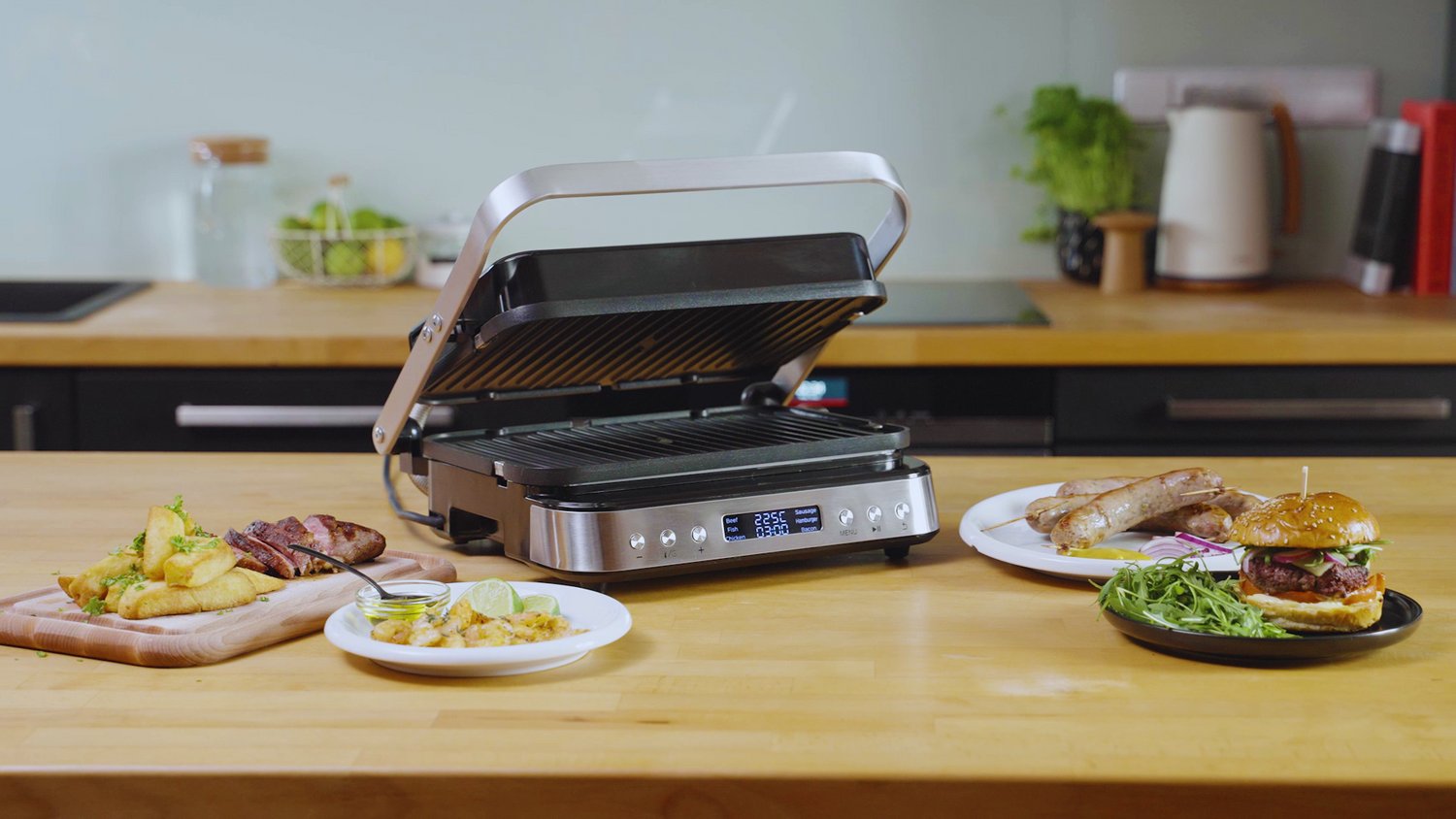
Kontaktný gril pečie z oboch strán naraz. Horná platňa tlačí na jedlo zhora, zatiaľ čo spodná platňa hoohrieva zdola. Výsledkom je rovnomerne upečené jedlo bez obracania – v porovnaní s klasickým grilom za zlomok času.
A na rozdiel od uhoľného grilu si nevyžaduje žiadnu prípravu, nevytvára dym a nezávisí od počasia.Kontaktný gril funguje v kuchyni, na balkóne aj na terase. Vlastne kdekoľvek, kde je elektrická zásuvka.
Mnohé modely sa dajú rozložiť aj naplocho. Kontaktný gril sa tak zmení na otvorený stolovýgril s dvojnásobnou grilovacou plochou, čo sa veľmi hodí pri poriadnom grilovaní s priateľmi.

pozor pri výbere kontaktného grilu
1.Výkon
Výkon vo wattoch určuje, ako rýchlo sa gril rozohreje a akú teplotu dokáže dosiahnuť. Na domáce použitie siahnite aspoň po 1 800 W, ideálne po2 000 W. Prečo? Slabšie modely v skutočnosti negrilujú, iba jedlo prehrejú. Poriadne opečený steak s chrumkavou kôrkou pri 1 200 W jednoducho nedosiahnete.
Vyšší výkon tiež znamená, že gril je pripravený na použitie už zadve až tri minúty. Lacnejšie modely potrebujú na dosiahnutie teploty výrazne dlhšie.
2. Grilovaciaplocha
Plocha v cm² určuje, koľko toho môžete pripraviť naraz –a či sa všetci najedia, kým je jedlo ešte teplé.
Orientačnýprehľad:
do 600 cm² –- pre jednu až dve
- osoby, na sendviče a ľahšie jedlá 600 – 1 000 cm²
- – pre 2 – 3 osoby, na bežné domáce grilovanie nad 1 000 cm²
- – pre rodiny alebo príležitostné grilovanie s priateľmi Príliš malá grilovacia plocha je najčastejšia chyba pri výbere.
a prvá dávka vychladne skôr, než dopečiete zvyšok.
3. RežimBBQ
Možnosť rozložiť gril na 180° a premeniť ho na otvorený stolový gril môže na prvý pohľad pôsobiť ako bonusová funkcia. V skutočnosti však výraznerozširuje možnosti prípravy jedla. Oceníte ju najmä pri hrubších kusoch mäsa, rybe alebo syre – teda pri jedlách, kde tlak hornej platne skôr prekáža.
Ak tento režim nie je uvedený v popiseproduktu, poobzerajte sa radšej po inom modeli.
4.Platne
Práve tu sa skrývajúnajväčšie rozdiely medzi modelmi.
Ryhovaná platňa zanechá na mäse klasické grilovacie prúžky a odvedie tuk prečz jedla. Hladká platňa je ideálna na vajcia, palacinky, sendviče alebo rybu.
Najlepšie grily ponúkajú oboje – buď ako obojstrannú platňu, ktorújednoducho otočíte, alebo ako sadu dvoch rôznych platní v balení.
Nepriľnavý povrch by mal byť samozrejmosťou pri každom grile. Bez neho sa jedlo lepí na platňu ačistenie sa zmení na nočnú moru. Na vyberateľných platniach vhodných do umývačky by ste nemali šetriť.
5. Regulácia teplotya automatické programy
Kuracie prsia potrebujú inú teplotu ako losos. Losos zase inú ako klobásy. Základné modely majú iba otočný termostat, čo úplne stačí, ak viete, čorobíte. Pre začiatočníkov sú však oveľa praktickejšie grily s automatickými programami – vy len vyberiete surovinu a gril si sám nastaví teplotu aj čas.
Ešte lepšie sú modely s pamäťou nastavení. Gril si zapamätá, ako ste sinaposledy upravili program na hovädzie mäso, a nabudúce začne s vašimi hodnotami.
6.Údržba
Dajú sa platne umývať v umývačke? Ak nie, poobzerajte sa radšej po inom modeli. Má gril odkvapkávaciu misku na tuk? Tuk musíniekam odtiecť – bez misky skončí na pracovnej doske. Je rukoväť tepelne izolovaná? S horným vekom musíte počas pečenia manipulovať bezpečne.

kontaktný gril?
Pod 100 £ / 100 $ nájdete základné modely s pevnýmiplatňami, bez regulácie teploty a s malou grilovacou plochou. Na občasný sendvič postačia, no pravidelné grilovanie s nimi radosť neprinesie.
100 – 200 £ / 100 – 200 $ pokrývasolídne domáce grily s reguláciou teploty. Pevné platne alebo menšia grilovacia plocha sú v tejto cenovej kategórii bežným kompromisom.
200 – 350 £ / 200 – 350 $ je najzaujímavejšiakategória. Vyberateľné platne vhodné do umývačky, väčšia grilovacia plocha, displej a automatické programy. Dobrým príkladom grilu, ktorý spĺňa všetky tieto podmienky, je Lauben Contact Grill Deluxe 2000ST. Má výkon 2 000 W, grilovaciu plochu 1 400 cm², režim BBQ, obojstranné platne vhodné do umývačky a 6 automatických programov s pamäťou – a to všetko za približne 120 £/€.
Nad 350 £ / 350 $ nájdete prémiovémodely s teplotnou sondou, nezávislou reguláciou teploty pre každú platňu alebo pokročilými senzormi prepečenia.
Najčastejšie chyby pri
kúpe kontaktného grilu
Príliš nízky výkon. Gril s výkonom pod 1 500 W mäso poriadneneupečie, iba ho prehreje. Pôsobí to ako úspora, no oľutujete ju.
Príliš malá grilovacia plocha. Pri štvorčlennej rodine znamená malá plocha grilovanie natri dávky. Jedlo vychladne skôr, než si všetci sadnú k stolu.
Pevné platne. Čistenie platne pripevnenej ku grilu jezdĺhavé. Po pár použitiach s tým prestanete.
Žiadny režim BBQ. Bez možnosti rozložiť gril naplocho ste odkázaní iba nakontaktné grilovanie a prichádzate o polovicu z toho, čo gril dokáže.
Žiadna odkvapkávacia miska. Tuk musí niekamodtiecť. Nejde o zanedbateľný detail.
Zhrnutie na záver: výkon, grilovacia plocha, platne vhodné do umývačky a režim BBQ – to sú
veci, na ktorých pri výbere naozaj záleží. Automatické programy sú už len čerešnička na torte.